How Lens Coatings Reduce Glare and Improve Image Clarity
In photography and optical observation, image clarity is often compromised by unwanted reflections that manifest as glare or lens flare. Anti-reflective coatings are applied to lens surfaces to address these issues by manipulating the way light interacts with glass. These thin-film technologies are designed to reduce the amount of light that reflects off the surface, thereby allowing more light to pass through the lens and contribute to the final image. Understanding the principles behind these coatings provides insight into how they can enhance visual contrast and detail.
ClearView Optics, a developer of optical solutions, incorporates anti-reflective coatings into its products to support clarity in various applications. The effectiveness of such coatings depends on factors such as the number of layers, the materials used, and the angle of incident light. Coatings are not a one-size-fits-all solution; they are engineered for specific wavelengths and usage conditions. Observers and photographers may notice improvements in scenes with high contrast or strong light sources when appropriate coatings are utilised.
This article explores the mechanics of anti-reflective coatings, their role in glare reduction, and their impact on image clarity. It also discusses the types of coatings available, application contexts, and considerations for selecting coated optics. The information is presented in a neutral, factual manner to inform readers about the technology without making definitive claims about performance outcomes.
Fundamentals of Light Reflection and Transmission
When light travels from air into glass, a portion of it is reflected at the interface due to the difference in refractive indices. This reflection can create ghosting, flare, and reduced contrast, particularly in complex lens systems with multiple elements. The amount of reflection depends on the angle of incidence and the refractive index of the glass. Uncoated lenses may reflect a significant percentage of light, leading to a loss of transmission and an increase in stray light that degrades image quality.
Anti-reflective coatings work by introducing one or more thin layers of material with specific refractive indices between the air and the glass. These layers cause destructive interference for reflected light waves, reducing the intensity of reflections across a range of wavelengths. The design of such coatings involves precise control of thickness, which is typically on the order of a quarter-wavelength of the light being targeted. This interference effect is the cornerstone of how coatings minimise glare and enhance transmission.
The effectiveness of a coating is influenced by the number of layers and the materials chosen. Single-layer coatings can reduce reflection at a single wavelength, often in the middle of the visible spectrum, but multi-layer coatings can achieve broader bandwidth reduction. Advanced designs may incorporate dozens of layers to optimise performance across the visible spectrum and even into near-infrared regions. The precise engineering of these layers allows for tailored spectral characteristics.
How Anti-Reflective Coatings Work
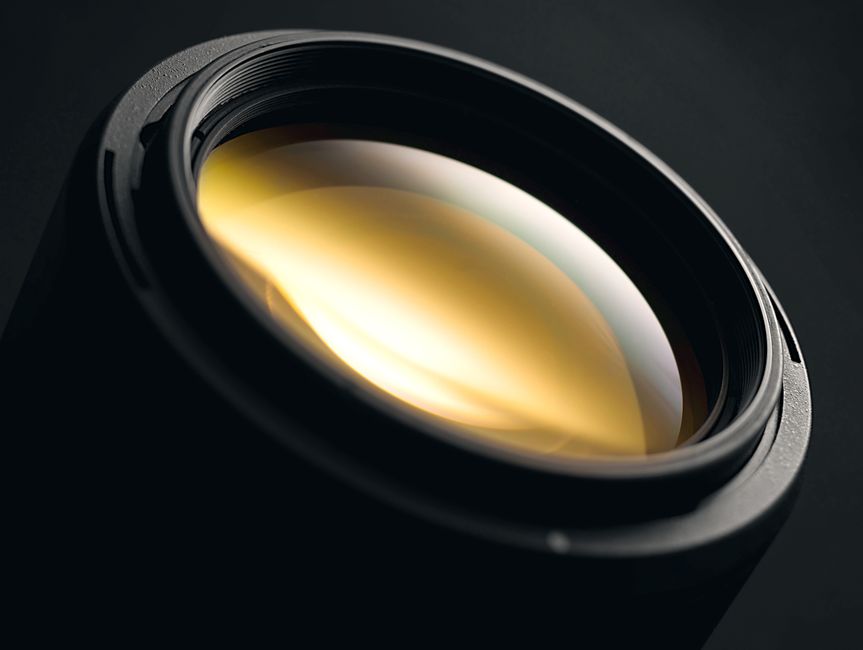
Anti-reflective coatings function through the principle of optical interference. When light encounters a coated surface, reflections occur at each interface: air-to-coating and coating-to-glass. By carefully selecting the thickness and refractive index of the coating, the reflected waves from these interfaces can be made to interfere destructively. This means the peaks of one wave align with the troughs of another, effectively cancelling each other out. As a result, less light is reflected, and more is transmitted through the lens.
The performance of a coating is often characterised by its reflectance curve, which shows the percentage of light reflected at each wavelength. A well-designed multi-coating can reduce average reflectance to below 0.5% across the visible spectrum, compared to around 4% per surface for uncoated glass. This reduction directly translates to increased light transmission and reduced stray light. However, achieving such low reflectance requires precise manufacturing processes and quality control.
It is important to note that coatings do not eliminate reflections entirely; they minimise them. Some residual reflection remains, and its impact depends on the overall optical design and the viewing conditions. Additionally, coatings can be optimised for different angles of incidence. For instance, coatings for photographic lenses often prioritise performance at normal incidence, while those for wide-angle lenses may need to account for oblique angles.
Types of Lens Coatings
There are several types of anti-reflective coatings, each with distinct characteristics and applications. The simplest is the single-layer coating, which is often made of magnesium fluoride. This type provides a moderate reduction in reflection, primarily at a specific wavelength, and is cost-effective for basic optical devices. However, its performance is limited across the full visible spectrum, and it may not be suitable for high-precision applications.
Multi-layer coatings consist of alternating layers of materials with high and low refractive indices. These coatings can be designed to achieve low reflectance over a broad range of wavelengths, significantly improving image clarity. They are common in quality photographic lenses, binoculars, and telescopes. The number of layers can vary from a few to over a hundred, with more layers generally allowing for more precise control of the reflectance curve.
Other specialised coatings include hydrophobic and oleophobic layers that repel water and oil, making lenses easier to clean, and scratch-resistant coatings that protect the underlying anti-reflective layers. Some coatings are also designed to reduce specific wavelengths, such as infrared or ultraviolet, for specialised imaging tasks. ClearView Optics offers a range of coating options tailored to different environmental and usage requirements.
Impact on Glare and Image Clarity
Glare occurs when excessive light is scattered or reflected within a lens system, leading to a washout of contrast and detail. Anti-reflective coatings mitigate glare by reducing the amount of light that reflects off lens surfaces. This is particularly beneficial in scenarios with strong light sources, such as shooting towards the sun or observing bright objects against dark backgrounds. By minimising internal reflections, coatings help preserve contrast and colour fidelity.
Image clarity is closely tied to contrast and resolution. When stray light is reduced, the darker areas of an image remain dark, and the brighter areas do not bleed into adjacent regions. This results in a more defined and crisp image. Coatings also contribute to better colour reproduction by preventing unwanted reflections that can introduce colour casts. However, the actual improvement in clarity depends on the overall optical design, the quality of the lens elements, and the shooting conditions.
In photography, coated lenses are often preferred for their ability to handle backlight and produce images with fewer artefacts. In observation, such as birdwatching or astronomy, coatings enhance the visibility of faint details by increasing light transmission and reducing glare from bright sources. While coatings are not a panacea, they are a critical component in modern optical systems.
Considerations for Selecting Coated Optics
When choosing coated optics, several factors should be considered to match the coating to the intended use. The number of coatings and their quality can vary widely among manufacturers, and more layers do not always guarantee better performance. The design and execution of the coating process are equally important. It is advisable to review specifications such as reflectance curves and transmission data when available.
Environmental factors also play a role. For outdoor use, coatings that resist moisture, dust, and scratching may be beneficial. For astrophotography, coatings that minimise reflections in the near-infrared may be desirable. Additionally, the angle of incidence in the intended application should be considered; some coatings are optimised for normal incidence, while others perform better at oblique angles.
- Determine the primary wavelengths of interest for your application.
- Check the reflectance specifications across the relevant spectral range.
- Consider durability and environmental resistance if used outdoors.
- Evaluate the overall optical design, as coatings are just one element.
- Consult with manufacturers or specialists for specific requirements.
ClearView Optics provides technical information on its coating technologies to assist users in making informed decisions. However, the suitability of a particular coating depends on individual needs and conditions, and no single solution fits all scenarios.
Anti-reflective coatings are a key enabler of high-quality optical performance, but their benefits are realised within a broader system of lens design and usage practices.
In summary, anti-reflective coatings reduce glare and improve image clarity by controlling reflections at lens surfaces. They are available in various types and configurations, each with trade-offs. Understanding their principles and limitations can help users select appropriate optics for photography, observation, and other applications. As with any technology, the outcomes depend on multiple factors, including the quality of the coating and the specific context of use.