Optical instruments have transformed the way people observe objects that are too distant, too small, or otherwise difficult to examine directly. From simple lenses to sophisticated telescopes and binoculars, their development combines principles of light, precision manufacturing, and scientific observation.
The Basic Lens
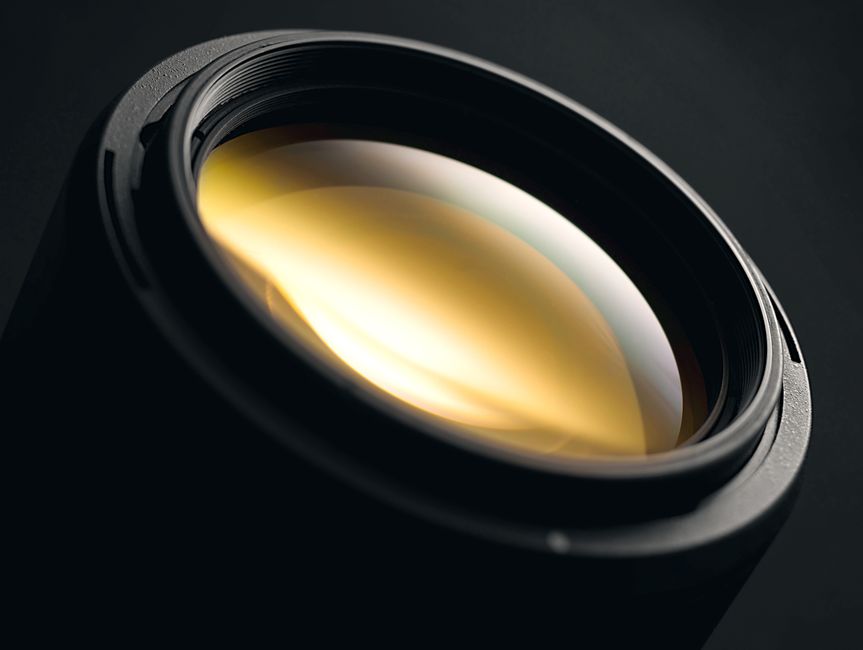
A lens changes the direction of light as it passes through a transparent material. Its curved surfaces determine how incoming rays converge or diverge, allowing an image to be formed, enlarged, reduced, or brought into focus.
Early lenses were relatively simple, but improvements in glassmaking and polishing gradually made more precise optical systems possible. The quality of a lens depends on factors such as its shape, material, surface accuracy, and ability to control optical distortions.
Building a Telescope
Telescopes use optical elements to produce a magnified view of distant objects. Refracting designs use lenses, while reflecting telescopes employ mirrors to collect and focus light.
The development of astronomical telescopes allowed observers to study features of the Moon, planets, stars, and other celestial objects in considerably greater detail. Larger instruments required increasingly careful attention to alignment, structural stability, and the quality of their optical surfaces.
Binocular Vision
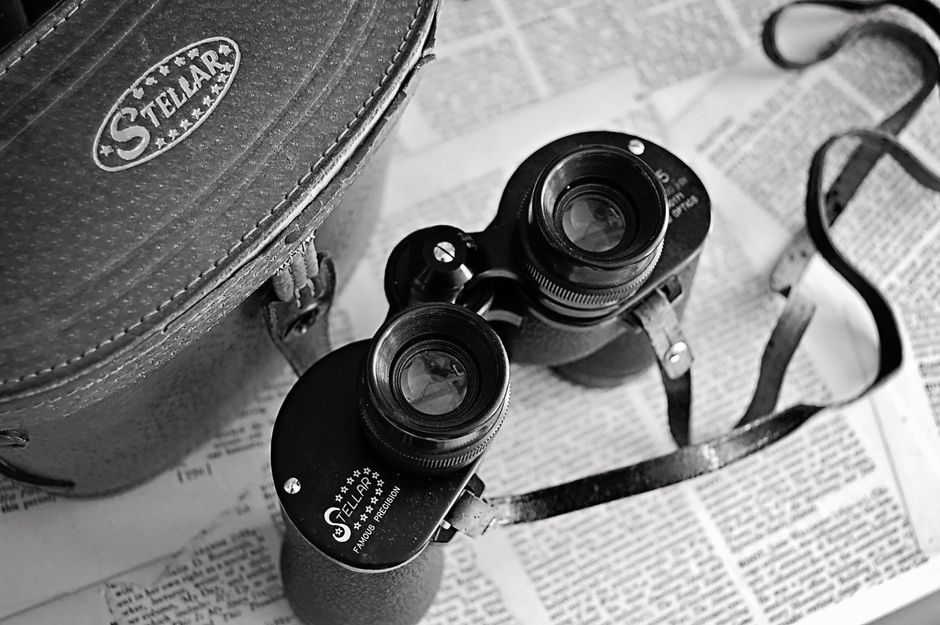
Binoculars essentially combine two optical paths so that each eye receives a magnified image. This arrangement provides a more natural viewing experience and can help users judge depth and spatial relationships.
Prisms are commonly used to fold the optical path, allowing binoculars to remain relatively compact despite requiring sufficient distance between optical components to produce useful magnification.
Optical Quality
Magnification alone does not determine the usefulness of an optical instrument. Resolution, contrast, field of view, brightness, and chromatic aberration all influence the final image.
Engineers developed multi-element lens systems to reduce certain optical errors. Better glass formulations and improved coatings further increased transmission and image quality while reducing unwanted reflections.
Instruments and Science
Optical devices became important across many scientific disciplines. Microscopes opened new possibilities for examining structures invisible to the naked eye, while telescopes expanded observations beyond Earth.
Surveying instruments, photographic equipment, spectroscopes, and laboratory devices likewise relied on controlled paths of light. Each application required optical components designed around a particular measurement or observation task.
From Glass to Digital Systems
Modern optical instruments increasingly combine traditional lenses and mirrors with electronic sensors. Digital cameras and astronomical detectors can record information that was once observed only through an eyepiece.
Computational techniques can also assist with focusing, image stabilization, calibration, and analysis. Despite these developments, the underlying principles of refraction, reflection, and image formation remain fundamental.
The history of optical instruments shows how precise control of light has expanded human